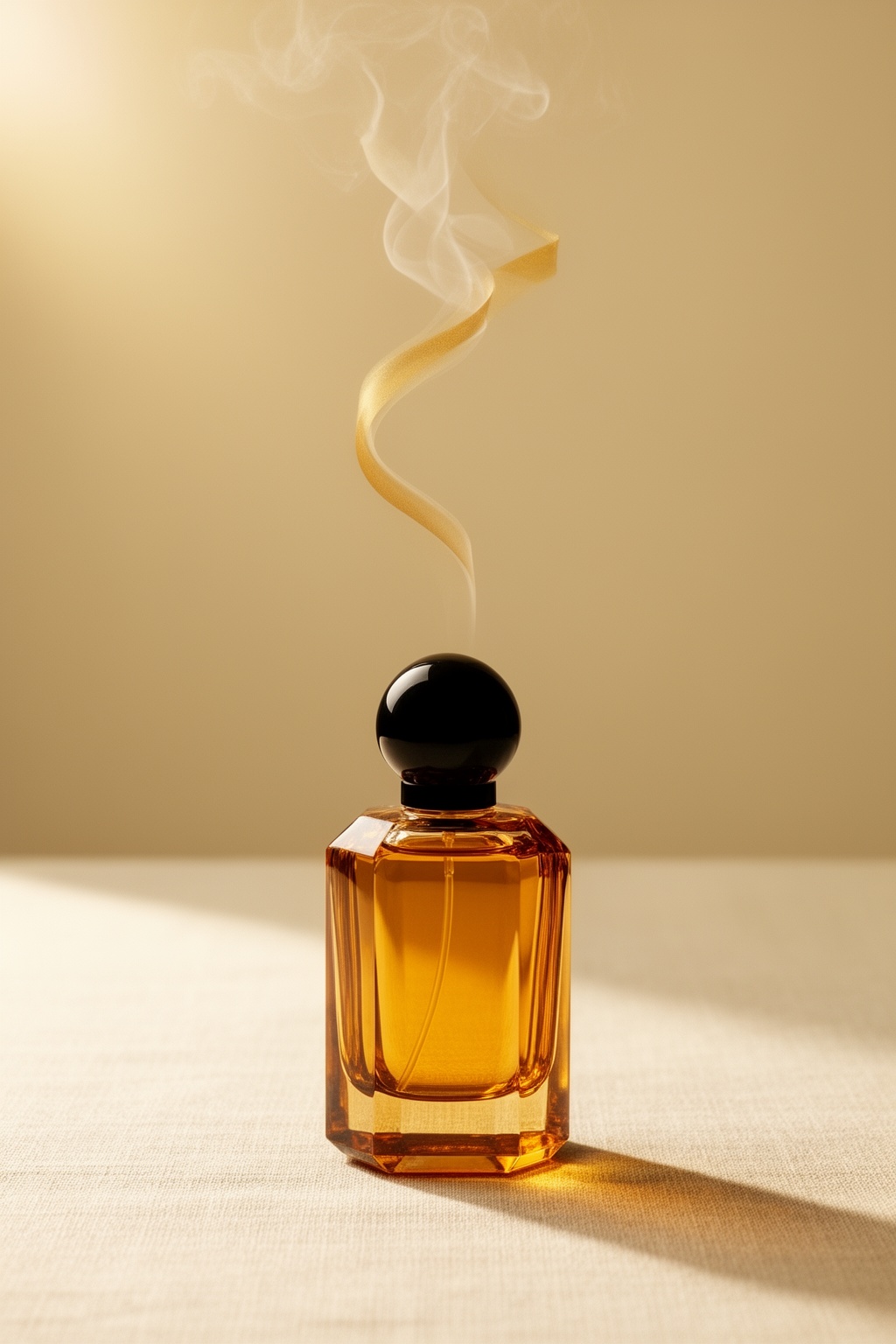
Most beginner perfume tutorials fail for one reason: they talk in percentages. Nobody wants to weigh 0.3 grams of jasmine absolute on a jewellery scale. The 40-drop method replaces all of it with something you can count.
The principle
A 10 ml perfume needs roughly 40 drops of aromatic material topped up with perfumery alcohol. Those 40 drops follow the classic pyramid:
- Top notes - 10 drops (25%): citrus, spices, aromatics. What you smell first, gone within the hour.
- Heart notes - 16 drops (40%): florals, fruits, teas. The personality, hours one to four.
- Base notes - 14 drops (35%): woods, ambers, musks, resins. The anchor that lasts all day.
If your perfume dies in two hours, you did not build a base. Longevity is architecture, not luck.
What you need
- Essential oils or fragrance oils for each note
- Perfumery alcohol (or high-proof neutral spirit)
- A 10 ml amber glass bottle
- Pipettes and a label
A complete starter formula: Saffron Amber
This is the warm amber profile behind some of the most hyped niche fragrances of the decade:
| Layer | Material | Drops |
|---|---|---|
| Top | Bitter orange | 6 |
| Top | Saffron co2 | 4 |
| Heart | Jasmine | 8 |
| Heart | Cedarwood | 8 |
| Base | Amber accord | 10 |
| Base | Benzoin | 4 |
The two rules that matter
1. Write everything down
The difference between a lucky accident and a repeatable signature scent is a notebook. Log every drop before it goes in the bottle.
2. Macerate - seriously
Shake the bottle daily and let it rest in a dark cupboard for three to four weeks. Freshly mixed perfume smells thin and boozy; macerated perfume smells like perfume. This single step separates homemade from handmade.
Where to go next
Once the method clicks, explore profiles: our creamy gourmand guide covers the biggest trend of the year, and the recipe board on Pinterest has ready-made formula cards to save.